SRISTI Innovations–BIRAC’s BioNEST is a business incubator funded by the Biotechnology Industry Research Assistance Council (BIRAC), Department of Biotechnology, Government of India. It provides a nurturing environment for innovations emerging from out-of-the-box thinking, traditional knowledge systems, grassroots creativity, and the ingenuity of university students and even children, supporting them through product development and commercialization.
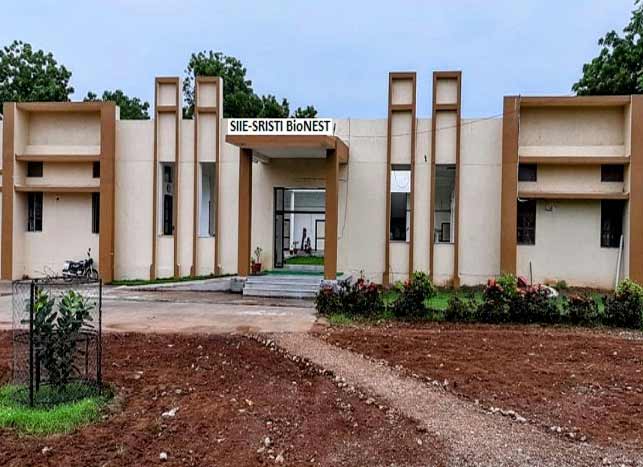
The Sanctuary of Innovation, Incubation, and Entrepreneurship (SIIE)–SRISTI BioNEST, located at Grambharti, Gandhinagar, serves as a hub for start-ups from diverse disciplines, including agriculture, environment, medicine, veterinary science, biotechnology, microbiology, life sciences, food technology, children’s creativity, and grassroots innovations. It acts as a comprehensive platform for both formal and informal innovators and start-ups, providing them with end-to-end incubation support.
SRISTI Innovations–BIRAC’s BioNEST actively collaborates with reputed institutions, leveraging an extensive database of student ideas with over 184,000 student projects available on Techpedia.sristi.org and integrating traditional knowledge and practices collected through Shodhyatras, the Sattvik Traditional Food Festival, and field analyses. The organization conducts the Biotechnology Innovation Ignition School (BIIS) and the Gandhian Young Technological Innovation (GYTI) Awards, where more than 1,500 young biotechnology innovators present their creative ideas and products. These early-stage innovations possess high potential and require guidance and incubation to reach market readiness.
In addition, Techpedia, SRISTI’s dedicated database of frugal innovations, serves as a rich source of ideas ready for implementation as scalable solutions. SRISTI Innovations has established MoUs with reputed national and international research institutions, laboratories, industries, and public systems, including collaborations with BIRAC-DBT, IMTech, UNICEF, IIT Bombay, USAID, JKUAT (Kenya), TUFE-China, ILO, JSW, 3M, HelpAge India, and Camaleonte Oy Ltd. These partnerships enable the development of innovative, sustainable technologies and their integration into public and private sector ecosystems.
SRISTI Innovations has successfully developed several herbal medicines rooted in traditional knowledge and practices, bridging ancient wisdom with modern science. The Shodhyatra and Sattvik Traditional Food Festival are flagship initiatives of SRISTI designed to observe, learn from, and share grassroots innovations. Recently, another initiative, Khedut Haat, has gained recognition for promoting natural and organic foods, vegetables, and products, connecting rural producers directly with urban consumers. Through the Khedut Haat initiative, SRISTI Innovations–BioNEST also facilitates direct market linkages for its associated farmers and incubatees, enabling them to reach consumers more effectively and enhance the visibility and value of their products.
Thus, SRISTI Innovations–BIRAC’s BioNEST stands as a unique ecosystem that fosters creativity, nurtures innovation, and empowers entrepreneurs to transform knowledge into impactful, sustainable enterprises.
Objectives of SIIE-SRISTI Innovations
To serve as a sanctuary of knowledge for marginalized communities—representing not marginal minds but extraordinary innovators who have developed breakthrough solutions to everyday challenges—and to complement their efforts with inclusive innovations emerging from the formal sector.
Mission of SRISTI Innovations
SRISTI Innovations is committed to promoting technology- and innovation-driven start-ups by providing comprehensive incubation support through virtual (in situ and ex situ) as well as physical incubation models. The in situ incubation model focuses on empowering grassroots innovators by supporting them at their own locations, enabling them to refine and scale their ideas within their local contexts.
Through its incubation ecosystem, SRISTI Innovations offers holistic mentorship covering diverse areas such as business planning, proof of concept development, technology validation, field trials, skill and technology gap mapping, product fabrication, and intellectual property rights (IPR) management. By integrating scientific, entrepreneurial, and traditional knowledge systems, the organization strives to transform innovative ideas into viable enterprises that contribute to sustainable and inclusive development.